
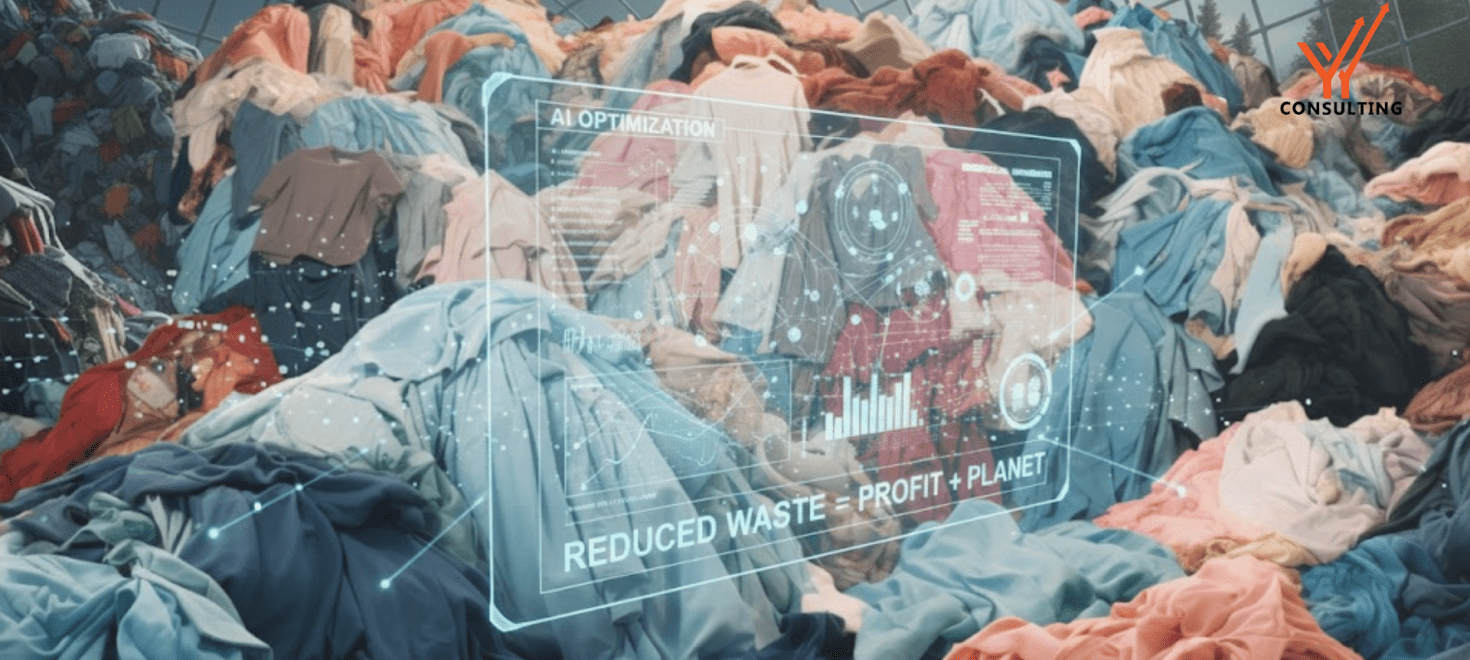
Why the industry’s biggest waste problem is no longer a forecasting issue—but a decision-making one
At the back of a warehouse in any major apparel hub—Tiruppur, Dhaka, Ho Chi Minh City, or even Los Angeles—there’s a quiet, uncomfortable truth sitting on metal racks. Thousands of garments. Tagged, polybagged, invoice-cleared. Some were produced just months ago. Some never even left the warehouse they were born in.
They weren’t rejected for quality.
They weren’t cancelled by buyers.
They simply… didn’t sell.
Overproduction in fashion isn’t dramatic. It doesn’t announce itself loudly. It creeps in through “just in case” decisions, conservative safety buffers, optimistic trend assumptions, and the industry’s deep fear of missing sales. By the time it shows up, it’s already too late—hidden behind clearance sales, off-price channels, and silent write-offs.
Now AI has entered the room, promising to fix it.
But can it really?
Overproduction: Fashion’s Most Normalised Failure
The fashion industry doesn’t talk about overproduction the way it talks about sustainability, innovation, or speed. Overproduction is treated as collateral damage—a cost of doing business.
A brand plans a season six to nine months in advance. Buyers rely on last year’s data, adjusted for growth targets and trend confidence. Production quantities are locked early to secure capacity and cost efficiencies. By the time the collection reaches stores, the consumer has already moved on—financially, emotionally, or culturally.
The result?
- Excess inventory
- Early markdowns
- Margin erosion
- Supplier pressure
- Environmental waste
And yet, the same cycle repeats every season.
Not because fashion professionals don’t see the problem—but because the system rewards availability over accuracy. Being out of stock feels like failure. Carrying excess inventory is just… inconvenient.
Why Humans Overproduce (Even When They Know Better)
It’s tempting to pin overproduction on bad forecasting or volatile consumer demand. But in reality, the root of the problem is far more human. Fashion decisions are rarely made in calm, data-perfect environments. They are made under pressure—pressure of time, targets, trends, and expectations.
Most buying and production calls happen with incomplete information. Trends are still forming, consumer sentiment is shifting, and macro conditions are uncertain. Add to this compressed calendars—shorter development windows, earlier commitment deadlines, and rigid delivery slots—and decision-making becomes reactive rather than reflective. In these moments, caution often disguises itself as excess.
There’s also an emotional layer that rarely gets acknowledged. Merchants and designers form strong attachments to products they believe in. A silhouette feels right. A colorway looks promising. A category has momentum. Walking away from a style—or producing less of it—can feel like admitting doubt. And in fashion, doubt is often mistaken for weakness.
Fear plays an equally powerful role. Fear of being out of stock. Fear of missing a trend. Fear of explaining lost sales to leadership. Producing extra units becomes a form of insurance. No one gets questioned for having stock. But everyone gets questioned for not having enough.
What AI Actually Changes (And What It Doesn’t)
AI doesn’t replace creativity, nor does it predict the next big trend with mystical accuracy. It doesn’t know which print will go viral or which silhouette will suddenly feel outdated. What it does—exceptionally well—is observe reality at a scale and speed no human team can match.
Instead of depending on a limited set of historical indicators, AI continuously connects signals across the value chain. It reads how each SKU is selling, in which sizes and colors, across different regions. It notices when weather patterns disrupt demand. It compares what consumers browse online with what they actually buy. It understands how sensitive a product is to markdowns and how reliably each supplier delivers against promised timelines.
But the real shift isn’t just in the volume of data. It’s in timing.
From Seasonal Bets to Continuous Decisions
Fashion has always been seasonal. But consumer behaviour no longer is.
AI enables brands to move away from “big seasonal bets” toward smaller, smarter commitments:
- Lower initial order quantities
- Faster read-and-react cycles
- Automated replenishment triggers
- Early exit for underperforming styles
This doesn’t mean producing less overall. It means producing more intentionally.
A style that works gets scaled faster.
A style that doesn’t work dies quietly—without clogging warehouses.
Overproduction stops being an assumption and becomes a conscious choice.
A Factory-Side Reality Check
There’s a common fear on the manufacturing side:
“AI-driven buying will kill volumes.”
In reality, what it kills is volatility.
Factories suffer most from overproduction when:
- Orders are placed optimistically and cancelled late
- Buyers push bulk quantities and then demand discounts
- Styles are changed mid-production
- Excess stock leads to delayed payments
In one export-oriented factory supplying casualwear, a buyer adopted AI-led demand sensing. Initial orders dropped by nearly 30%. The factory expected pain.
Instead, what followed was:
- Faster reorder cycles
- Better line stability
- Fewer style changes
- More predictable capacity planning
The factory didn’t produce more units—but it produced cleaner orders.
For manufacturers, AI doesn’t mean less business. It means less chaos.
The Culture Shift AI Forces (Whether Brands Like It or Not)
AI doesn’t just change numbers. It changes accountability.
When decisions are data-backed:
- Excess inventory has a clear audit trail
- Gut-driven overrides become visible
- Poor calls can’t hide behind averages
This is deeply uncomfortable for fashion teams used to creative autonomy.
But it also unlocks something powerful:
- More honest planning conversations
- Cross-functional alignment
- Shared responsibility between buying, planning, and sourcing
AI doesn’t replace human judgment.
It exposes when judgment becomes habit.
The Environmental Angle (Without the Greenwashing)
Fashion sustainability discussions often focus on materials, recycling, and carbon footprints. Overproduction quietly undermines all of it.
A sustainable fabric that never sells is still waste.
An eco-certified factory producing excess is still overproducing.
AI attacks sustainability at its root—not by changing how garments are made, but by questioning whether they should be made at all.
Fewer unnecessary units means:
- Lower raw material consumption
- Less energy use
- Reduced landfill pressure
- Less discount-driven overconsumption
Sustainability doesn’t start at the fabric stage.
It starts at the buy quantity.
What the Future Actually Looks Like
The future of fashion production isn’t hyper-automation or zero inventory. It’s responsive precision.
Expect to see:
- Smaller drops, released more frequently
- AI-driven OTB management
- Tighter brand–supplier data integration
- Production triggered by demand signals, not forecasts alone
Overproduction won’t disappear. Fashion will always involve uncertainty.
But AI is steadily removing the industry’s favourite excuse:
“We didn’t know.”
Now, brands know.
What they do with that knowledge will define the next decade.
So… Who’s Winning: AI or Overproduction?
Right now, it’s a draw.
Overproduction still exists—but it’s under pressure. For the first time, fashion has a system that calmly, consistently, and unemotionally says:
“You don’t need more. You need better decisions.”
AI doesn’t shout. It doesn’t dramatise. It simply waits—showing the same uncomfortable truth until someone listens.
And in an industry built on instinct, speed, and excess, that quiet persistence might be its most disruptive feature yet.

Leave a Comment